

Choosing a domain name looks simple from the outside, but in practice it can shape search visibility, brand trust, email deliverability, and even long-term acquisition costs. In 2024, the domain industry surpassed 360 million registered domain names worldwide, according to Verisign’s Domain Name Industry Brief, which means the competition for clean, memorable names is not getting easier. That is exactly why **Domain Research** has become a practical discipline rather than a branding side task.
A strong domain strategy starts with understanding more than availability. Teams that skip **Website Research** often discover problems later: a name that is hard to pronounce, a past association with spam, a trademark conflict, or a domain that looks trustworthy but has a damaged history. Those issues can slow launches and create avoidable risk. By contrast, a careful review of ownership history, backlink profile, indexing status, and prior use can reveal whether a domain is a genuine asset or a liability.
## What Domain Research Actually Covers
Good **Domain Research** combines technical checks, brand analysis, and historical due diligence. Online Diagnostics A domain can be short and available yet still be a poor choice if it previously hosted malware, thin affiliate pages, or parked ads. Search engines do not treat all domains equally, and users certainly do not either.
In practice, the process often includes examining WHOIS records, DNS configuration, certificate history, archived content through services like the Wayback Machine, and backlink quality. When a domain has been used for years, its age may help with trust signals, but only if the history is clean. Domains with unnatural link patterns or repeated ownership changes can require far more cleanup than starting fresh.
This is also where **Website Research** becomes valuable before migration or acquisition. Businesses buying an existing site often focus on traffic screenshots, but traffic alone does not prove durability. A site with 20,000 monthly visits can still be dependent on one vulnerable keyword or a handful of low-quality referrals. Looking at traffic sources, ranking stability, and content depth gives a more realistic picture.
## Website Health Is No Longer Optional
Once a site goes live, **Website Health** becomes the operating condition that determines whether users and crawlers can trust it. Google has emphasized page experience for years, and Core Web Vitals remain a useful benchmark. As of 2024, Google’s Largest Contentful Paint target is still under 2.5 seconds for a “good” experience, while Interaction to Next Paint and Cumulative Layout Shift help measure responsiveness and visual stability.
Poor **Website Health** is expensive. A retail page that loads in 1 second typically converts better than one that loads in 5 seconds, and research from Deloitte has repeatedly shown that even small improvements in mobile speed can lift conversion rates. For enterprises, the impact is larger because slow systems often create cascading failures: support tickets rise, ad spend becomes less efficient, and internal teams waste time investigating issues that could have been prevented by routine monitoring.
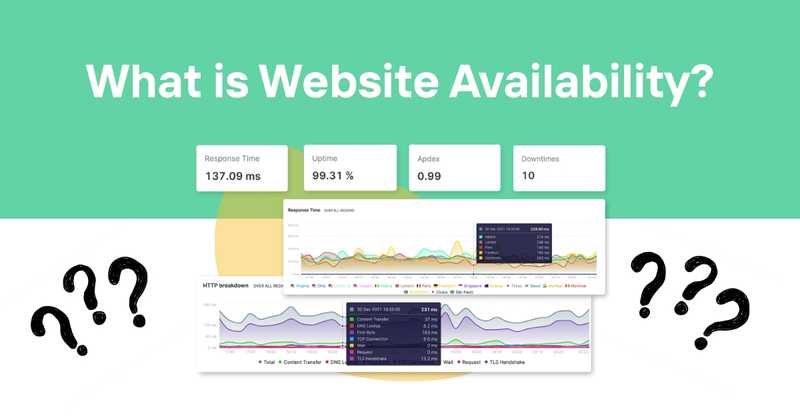
A mature health check usually tracks uptime, TLS expiration, broken links, crawl errors, mixed-content warnings, redirect chains, index bloat, and server response times. For businesses running revenue-critical sites, monitoring should be continuous, not quarterly. That shift became common after the rise of always-on commerce and SaaS, where downtime can mean immediate revenue loss.
## Web Performance as a Competitive Advantage
**Web Performance** is not only a front-end concern. It is the sum of server speed, caching, asset compression, code quality, CDN strategy, and database efficiency. Amazon has long reported that every 100 milliseconds of latency can affect revenue, and although the exact impact varies by product and audience, the business case is clear: faster sites reduce friction.
Modern performance work often starts with the biggest visible bottlenecks. Large images, unoptimized JavaScript bundles, render-blocking CSS, and third-party scripts are frequent offenders. A site may look polished while quietly shipping 3 MB of JavaScript to mobile users, which is excessive for many content or lead-generation pages. Moving from that to 500 KB or less can dramatically improve load times, especially on 4G networks where real-world conditions are uneven.
One practical example is an e-commerce brand that uses **Website Research** to compare landing page load times before a seasonal campaign. If competitor pages load in under 2 seconds and its own pages take 4 to 5 seconds, the brand can estimate not only SEO disadvantages but also likely paid-media inefficiency. Faster pages tend to get more from the same click budget because fewer users abandon before interacting.
## A Practical Workflow for Better Decisions
A reliable review process usually connects domain choice, technical health, and performance into one workflow:
- Check trademark conflicts, historical ownership, and archived content before registering or buying a domain.
- Inspect the backlink profile for spam, link farms, or irrelevant foreign-language anchors.
- Test site speed on mobile and desktop with real-user and lab tools.
- Review indexing, canonical tags, sitemap quality, and crawl errors.
- Compare your pages against direct competitors in both **Website Research** and **Web Performance** audits.
Teams that follow this sequence tend to avoid the most common traps: buying a domain with hidden baggage, launching on a broken technical foundation, or assuming traffic problems are purely a marketing issue. In reality, the domain, server, and front-end are often linked.
## Where the Market Is Heading
The next phase of **Domain Research** and **Website Health** will likely be more automated. Security scanners, SEO crawlers, and performance platforms are increasingly using machine learning to detect anomalies faster than manual review can. That matters because the web is growing more crowded and more adversarial. Spam domains, phishing infrastructure, and AI-generated content networks are pushing organizations to be more selective about the assets they trust.
At the same time, performance expectations keep rising. By 2025, mobile users will account for the majority of global web traffic, and that makes efficient design a baseline requirement, not a differentiator. Companies that treat **Web Performance** as part of brand trust usually see better retention, lower support burden, and cleaner analytics. Those that ignore it often end up paying later in lost rankings, lower conversion rates, and expensive rebuilds.
The most effective teams now treat **Website Research** as an ongoing practice instead of a one-time checklist. They revisit their domains, monitor technical signals, and benchmark speed against the market every time they ship a major change. That habit is what separates sites that merely exist from sites that keep earning trust over time.